Additive Manufacturing refers to various technologies applied to manufacture physical models, prototypes or functional components in short time, directly from CAD data by depositing subsequent layers of material based on a predefined pattern.
Fused Deposition Modelling (FDM)
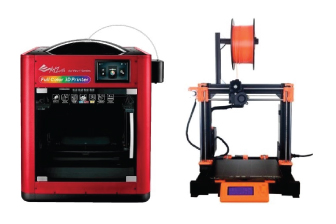
A low-cost AM process, which provides high-building speed and simplicity for 3D model fabrication. A continuous filament of a thermoplastic material is loaded and extruded through a heated print head that moves in two dimensions to deposit successive layers of material. This technology is suitable for rapid prototyping of parts providing a “touch a feel” aspect to your novel solution.
Selective Laser Sintering (SLS)
Uses a high-power laser to sinter small particles of powdered material. A laser beam scans the surface of the powdered material and selectively sinters the powder to form a solid cross-section of the desired model. The process is repeated until the final 3D object appears. SLS provides high durability, satisfactory mechanical properties and the creation of geometric complex models without the need of support structures. The technology is ideal for the manufacturing of functional parts and assemblies.
Direct Metal Laser Sintering (DMLS)
A laser-based 3D printing technology. The tank containing the powder is lifted, revealing a thin layer of metal that is spread over the building platform. After sintering the first layer, a new prescribed dose of powder is applied to form the next layer of the desired part. DMLS products present excellent mechanical properties and are used in the most demanding applications.
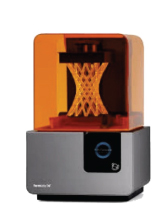
Stereolithography (SLA)
One of the most common AM processes for building parts, prototypes and patterns by focusing an ultraviolet (UV) laser on a vat of photopolymer resin. The vat contains the liquid polymer with a movable platform within. The resin hardens where the laser hits the surface, revealing layer-by-layer the final object. SLA is characterized for high dimensional accuracy and smooth surface finish.
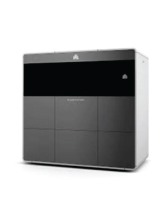
Multijet Process (MJP)
Applies inkjet technologies to create physical 3D models. Droplets of photopolymer material (resin) are selectively deposited on the building platform by the binder printing head, which moves in two directions. The polymer solidifies by utilizing ultraviolet light. The building platform lowers to the next layer and the process is repeated producing the model. MJP parts provide high resolution and dimensional accuracy, high surface quality, as well as the ability to use multiple materials in the same component.
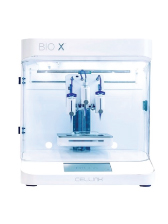
3D Bioprinting
3D Bio-printing Technology allows the 3D printing of biological prototypes, by utilizing material extrusion technology and bioinks as raw material. The user selects and places the appropriate building platform (e.g. petri dish), and then a moving nozzle, extrudes and deposites each cross-sectional layer of the model successively. Subsequently, the building platform moves in the z-axis, and a new layer of material is deposited each time through the nozzle. The process is repeated until the desired 3D model is completed.
PCB 3D printing
The offered PCB 3D printing is ideal to create double sided printed circuit boards (PCBs). This PCB 3D printing technology allows to create multilayered rigid and flexible circuits boards on FR-4, Kapton or any plastic substrate of your choice by printing conductive and insulating inks on them.
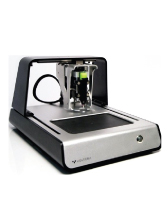
CNC milling
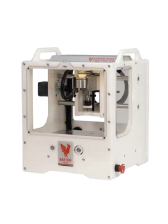
CNC milling can be used to transform a raw material into a finished 3D model by subtracting material. It is employed in various applications for drilling and cutting materials like soft metals, plastics, and morewood. With the aid of machining high accuracy components can be produced on a customized and desired geometry.AMU haaving a PCB milling machine is able to make several PCB prototypes within a single day.